HTML5 – Unknown JavaScript Web APIs
There’s a lot of cool things that HTML5 can do, using local storage for data saving/retrieval or acquiring a user’s geolocation for your custom Google map. Well, it turns out there are many, many more JavaScript APIs that I haven’t seen people mention; below are a few of these.
Before we go on, I should mention I’ll be focusing on APIs which benefit mobile/tablet devices, since these are really cool and useful in modern web applications.
Online State
This exposes network connection information to the web; quite simply, we can now determine if a user has an Internet connection within our web application. This is highly useful in cases where apps stream data in, we can let the user know that there’s a connection issue rather than simply returning nothing, creating a much better user experience.
This API is being updated, things like grabbing a connection speed and adjusting the app accordingly would be useful, for example degrading image quality.
window.addEventListener('offline', networkStatus);
window.addEventListener('online', networkStatus);
function networkStatus(e) {
  console.log(e);
}
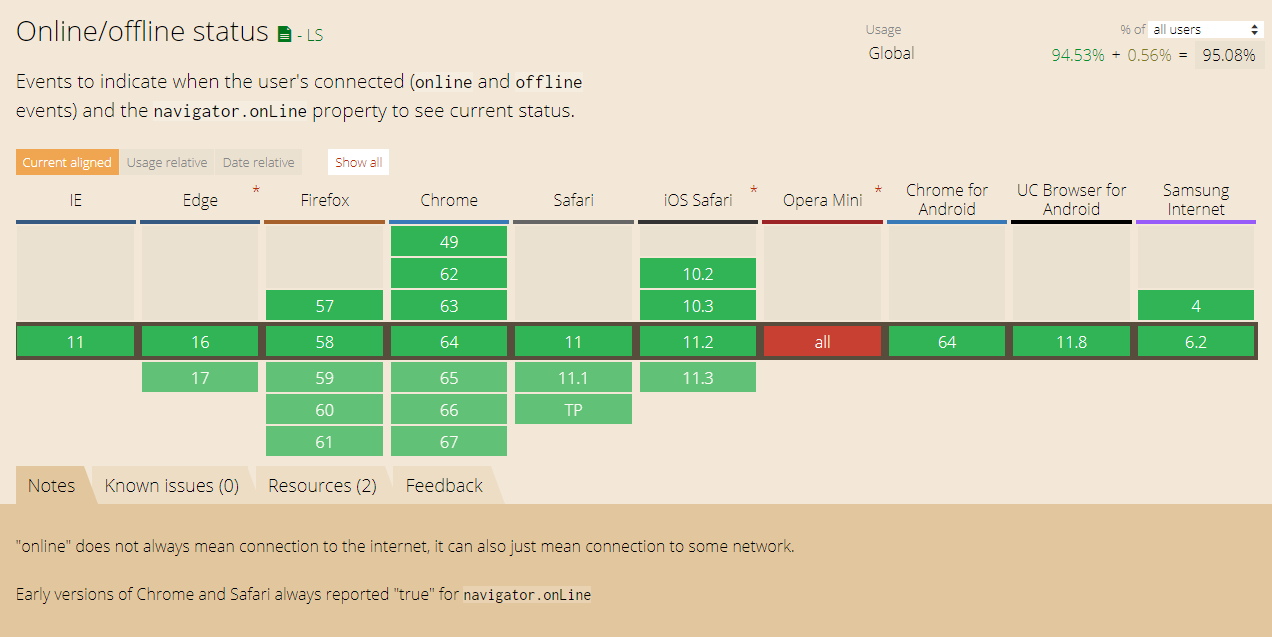
Support
Browser support for this is excellent for recent browser versions, with some of the smaller device-specific browsers such as Samsung Internet supporting it.
Device Orientation
From this we have an easy way to determine the orientation of a device. This would be especially useful when dealing with media heavy web apps and ensuring your content can use the new orientation real estate efficiently. Also, combined with CSS we can rotate images in a 3D space.
window.addEventListener('deviceorientation', (e) => {
console.log('alpha:', e.alpha);
console.log('beta:', e.beta);
console.log('gamma:', e.gamma);
});
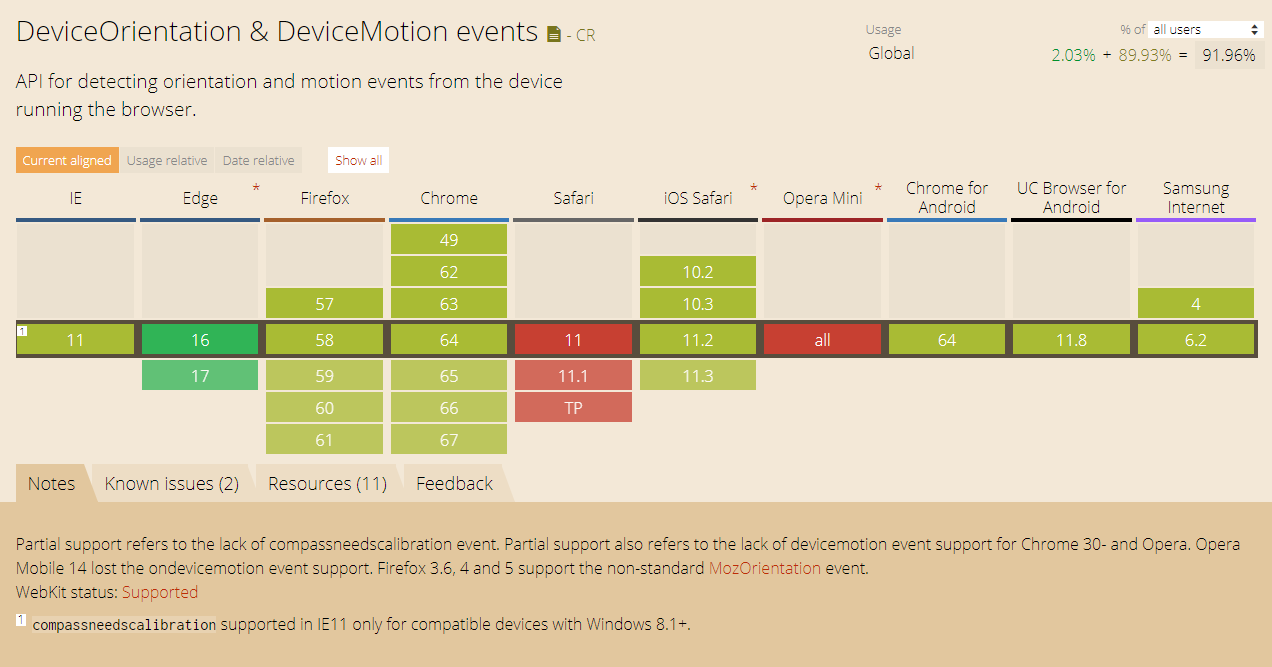
Support
Browser support for this isn’t great, partial support with known issues. Fine for fun, non-essential features, but I wouldn’t rely on it.
Capture Ambient Light
This is really, really cool. The metric returned from this is lux which is used to measure light. You can read about the sensor API more here. A use case for this would be switching to a darker or lighter theme depending on available light, enabling the user to choose would certainly be a nice feature and provide a better user experience.
window.addEventListener('devicelight', (e) => {
  console.log(`${e.value} lux`);
})
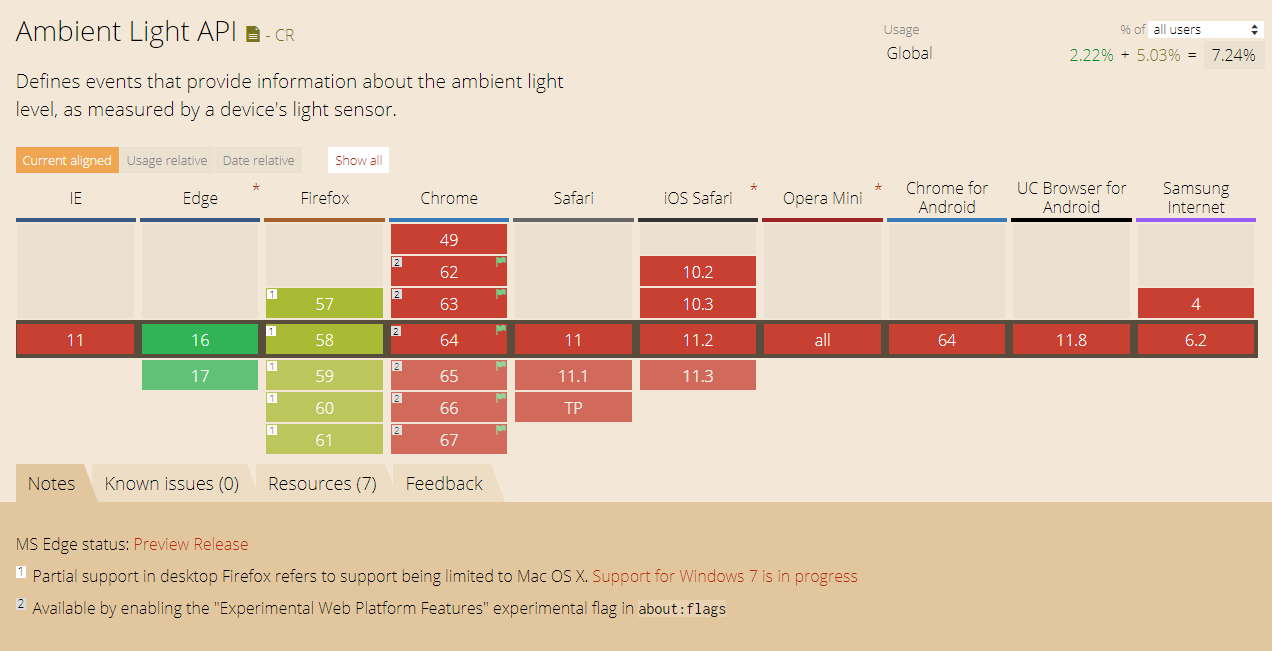
Support
Browser support for this is bad: it has been available in Chrome since version 62, however it is an experimental feature and has to be enabled.
Battery Level
We can now detect battery levels, which has the added benefit of determining if a device is plugged into a power source. The code for this is a little different in that you’re using a promise. Since the W3C example has many code samples, I’ll use one of these.
navigator.getBattery().then(function(battery) {
  console.log(battery.level);
  battery.addEventListener('levelchange', function() {
    console.log(this.level);
  });
});
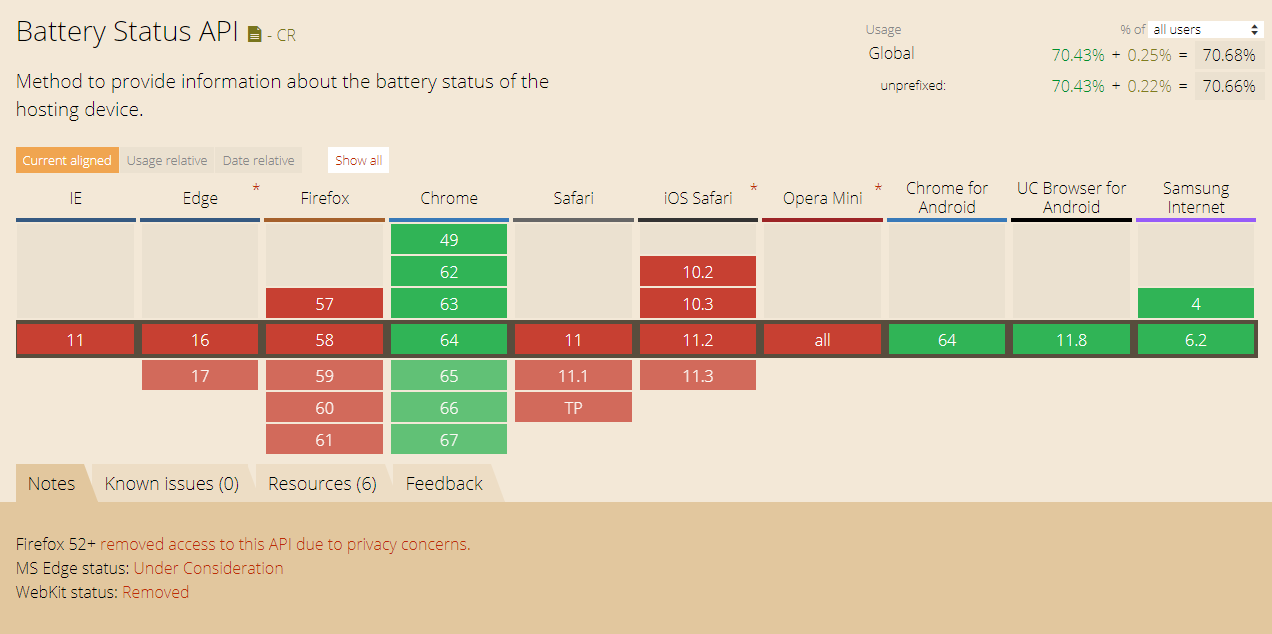
Support
Browser support for this is pretty poor unless you’re specifically targeting Chrome. Also, as Firefox has removed the feature, it doesn’t look promising for the future.